Street Photography Hacks Your Natural Brain Behaviour
How Street Photography can change your nervous system for better
We acquire experience through repetition. A single, isolated experience has almost no biological value. The value lies in learning how to respond to a stimulus that appears again and again in our environment, in a way that helps us stay alive.
The more often something happens, the more automatic our response becomes. It turns dull. Our brain learns to handle it without needing our full attention. We can perform the action while thinking about something else, mentally being somewhere else.
This process has a name: habituation. Habituation is a mechanism the brain uses to stop wasting energy on repetitive, predictable stimuli. It’s an efficient evolutionary strategy. Daily situations become automated procedures. The brain optimizes for efficiency, not for beauty. A camera can interrupt that.
Repetition becomes boring. We learn how to do things without thinking. We detach. We drift away from the present moment and go mentally elsewhere. But that only happens once we’ve gone through the same experience many times and the brain has learned to run it automatically. So when we walk the same streets, in the same city, following the same routes, we’re often not actually there. The body moves through space, but the mind is absent.
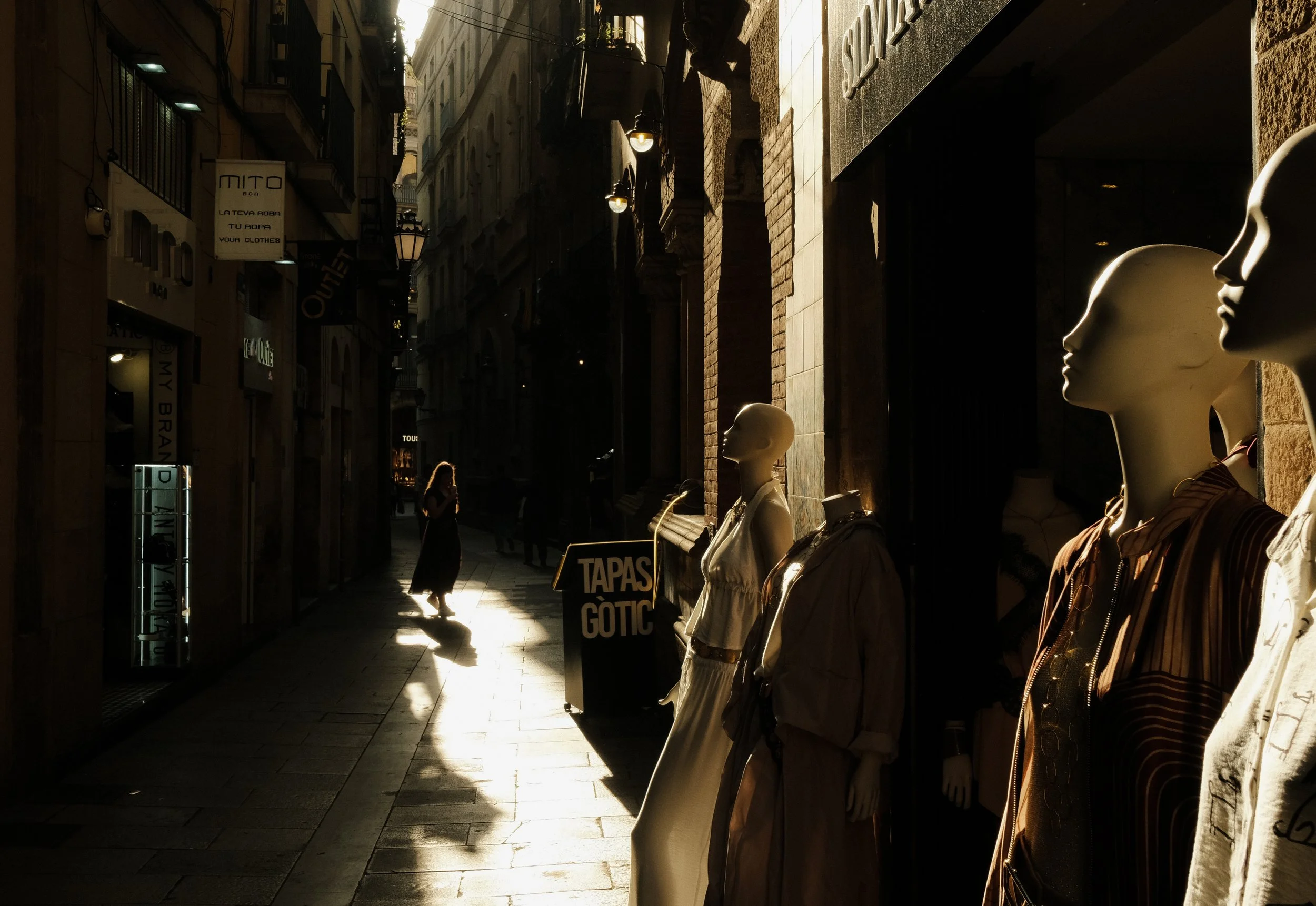
Seeing consciously is unnatural to us. It resists our biology. It works against efficiency, and in favor of beauty. That is exactly what we’re doing when we’re shooting street photography.
Street photography can break this automatic response. Even if we’re walking the same paths we’ve walked a hundred times, and repeating actions our body can now perform unconsciously, the simple act of carrying a camera — and having the intention to make photographs — forces us to become present. Physically present, but also mentally present.
When the mind is focused on making images, we begin to actively and deliberately observe. We are not just moving through the streets anymore. We are noticing them. We start paying attention to details that live inside the familiar, repetitive patterns our brain normally filters out as “not important for survival.”
With a camera, we turn off the brain’s autopilot.
We hack our own experience. We interfere with the default behavior of our nervous system. We step in and take control of how we perceive reality.
While the brain is constantly trying to save energy, reduce thinking time, and minimize effort, we reverse that simply by deciding to carry a camera. In doing so, we wake our attention up during the walk.
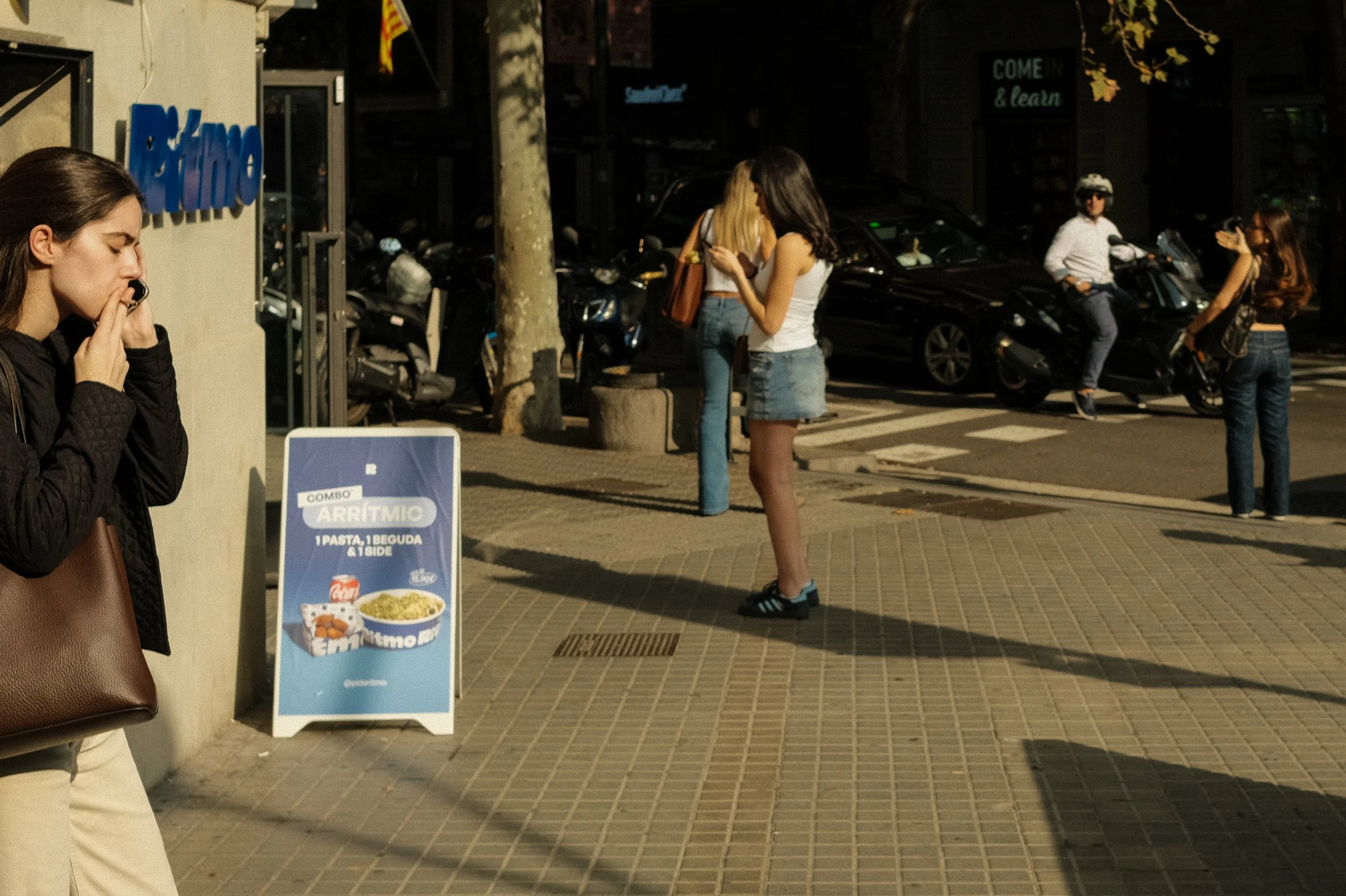
Those repetitive stimuli — the ones we’ve learned to react to automatically for the sake of survival — become compositional elements we can use for our own enjoyment, curiosity, and creation. Traffic signs that guide us through the streets. Light and shadow that outline our path. Strangers we subconscio
usly avoid or who avoid us. Cars weaving through the city like blood through veins. Pigeons that seem to exist in a separate layer of reality, indifferent to us, yet sharing our space. The hidden shadows carved out by beams of light on building facades.
Every element that makes up the city — the things we see every day, the things we’ve learned to decode in order to navigate the urban chaos without thinking — is reborn. They appear again. We wake up from the unconscious transit and start assigning value, giving beauty, to objects, gestures, and scenes that we would normally ignore completely.
All of this comes from a biological system that once helped us survive. A mechanism that puts us into a kind of mental sleep during repetitive, routine, automatable actions.
Our attention is anesthetized to conserve energy. That’s why reactivating it feels difficult. Looking is an active process. It demands mental work. It tires us out. Not just the walking — the seeing. Truly seeing is mentally exhausting. But it also rewards us. It keeps us in the present. It makes us enjoy the moment. It teaches us to appreciate the beauty of the repetitive, the ordinary, the daily processes that surround us.
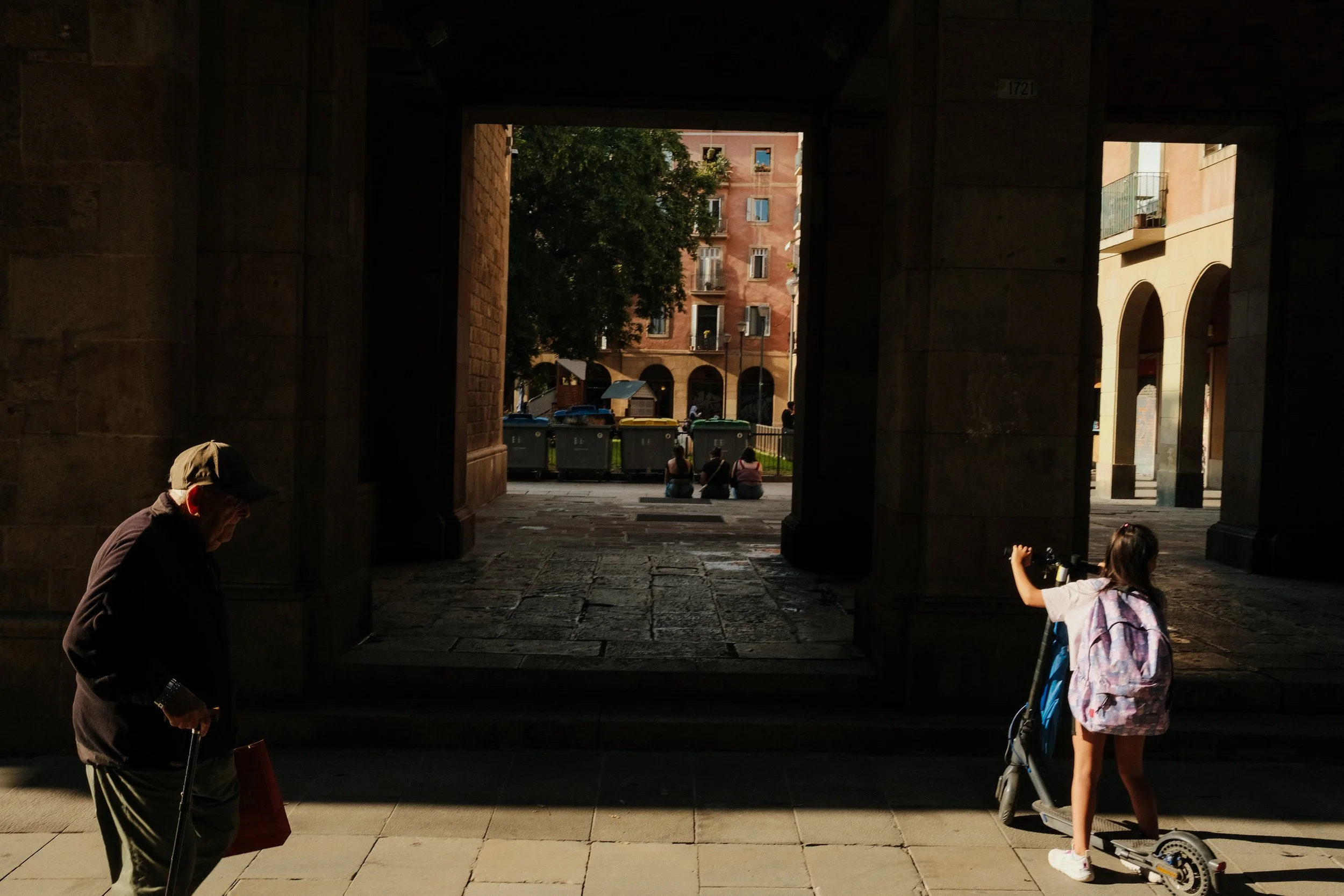
Our photos are not just images. They are records of moments of awareness. They are evidence that, for an instant, we were fully there.
So when we think our photography is useless, that we didn’t “get anything,” that we’re not making the art we intended to make, we should remember what actually happened: we saw what most people walk past. Street photography helped us wake up. It helped us enjoy the present. It taught us to appreciate the beauty of the mundane — the quiet subtleties and hidden details inside what looks boring or worthless, inside what our brain usually discards because it has no survival value.
We turned nature upside down for a moment. We looked it in the eye, and we appreciated it, even when it wanted to disappear into the background.
